Real Product · No Mockups
See It In Action
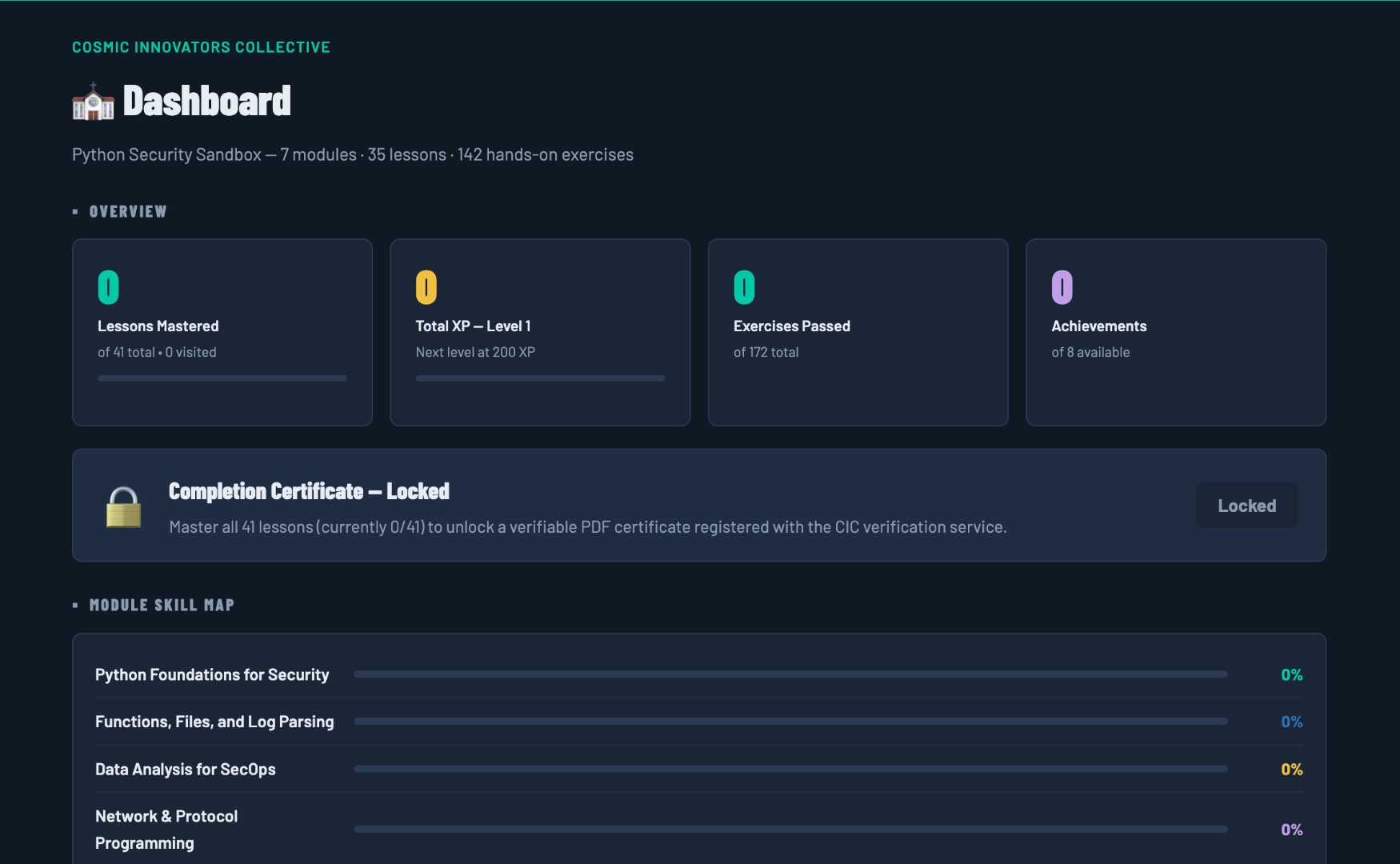
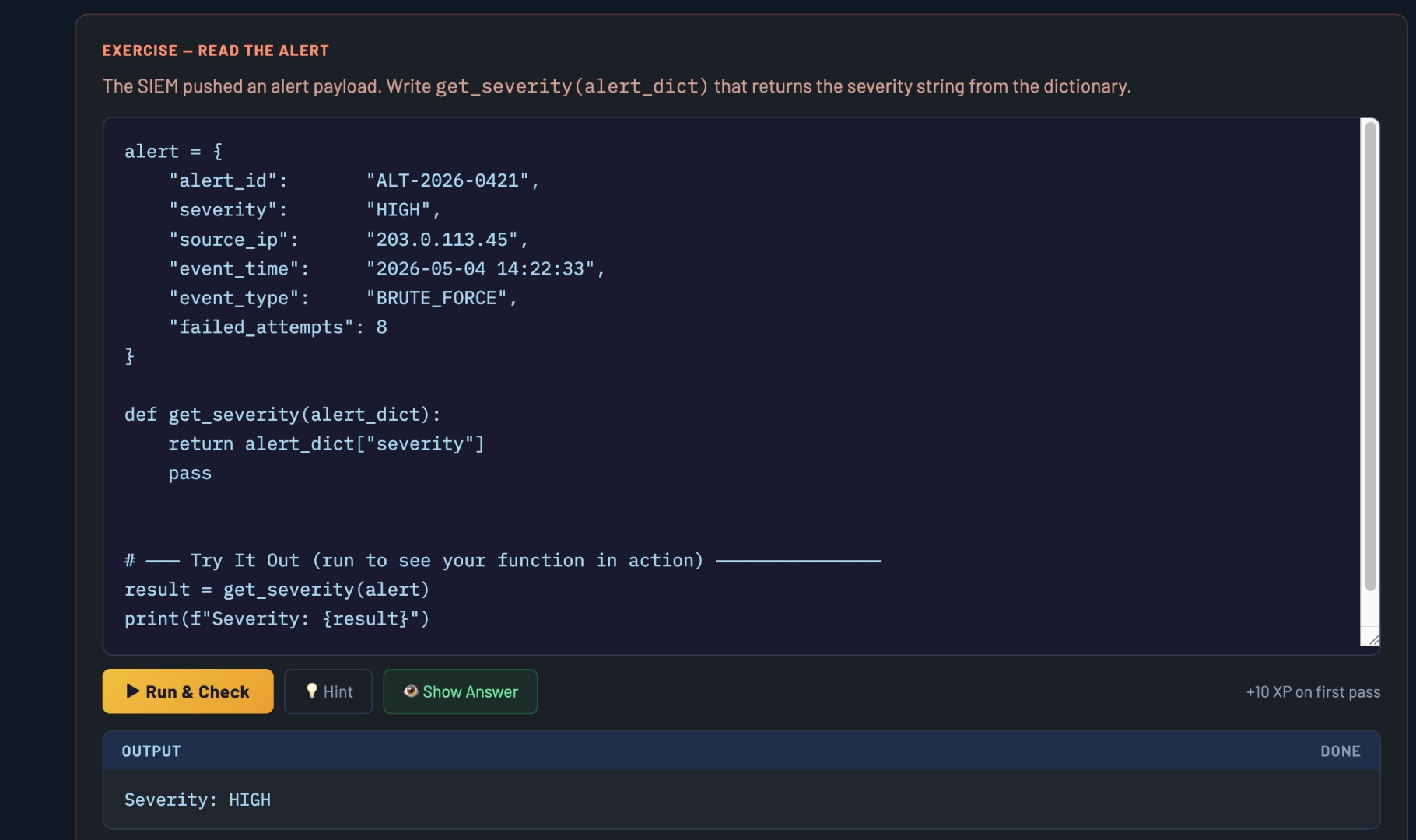
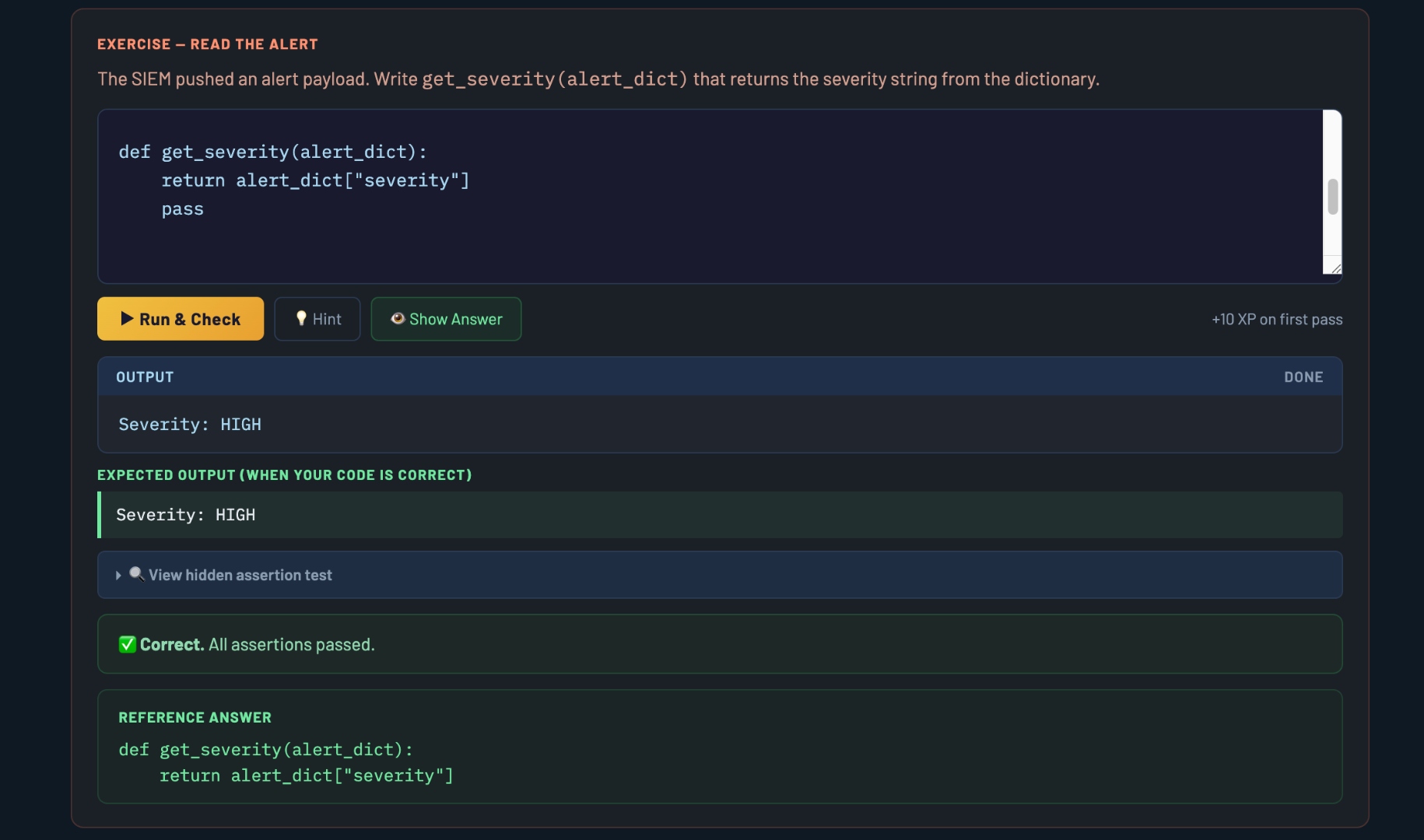
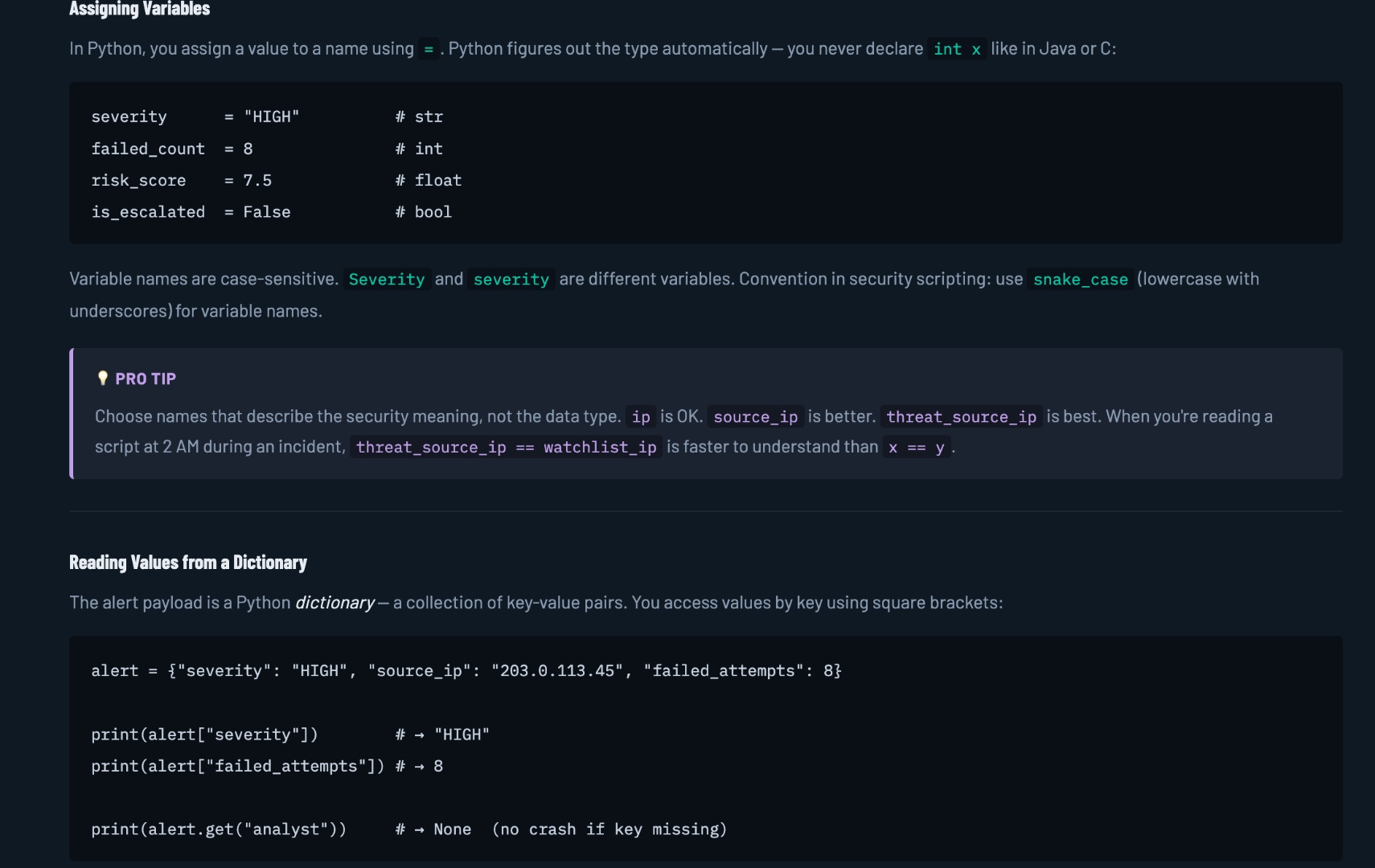
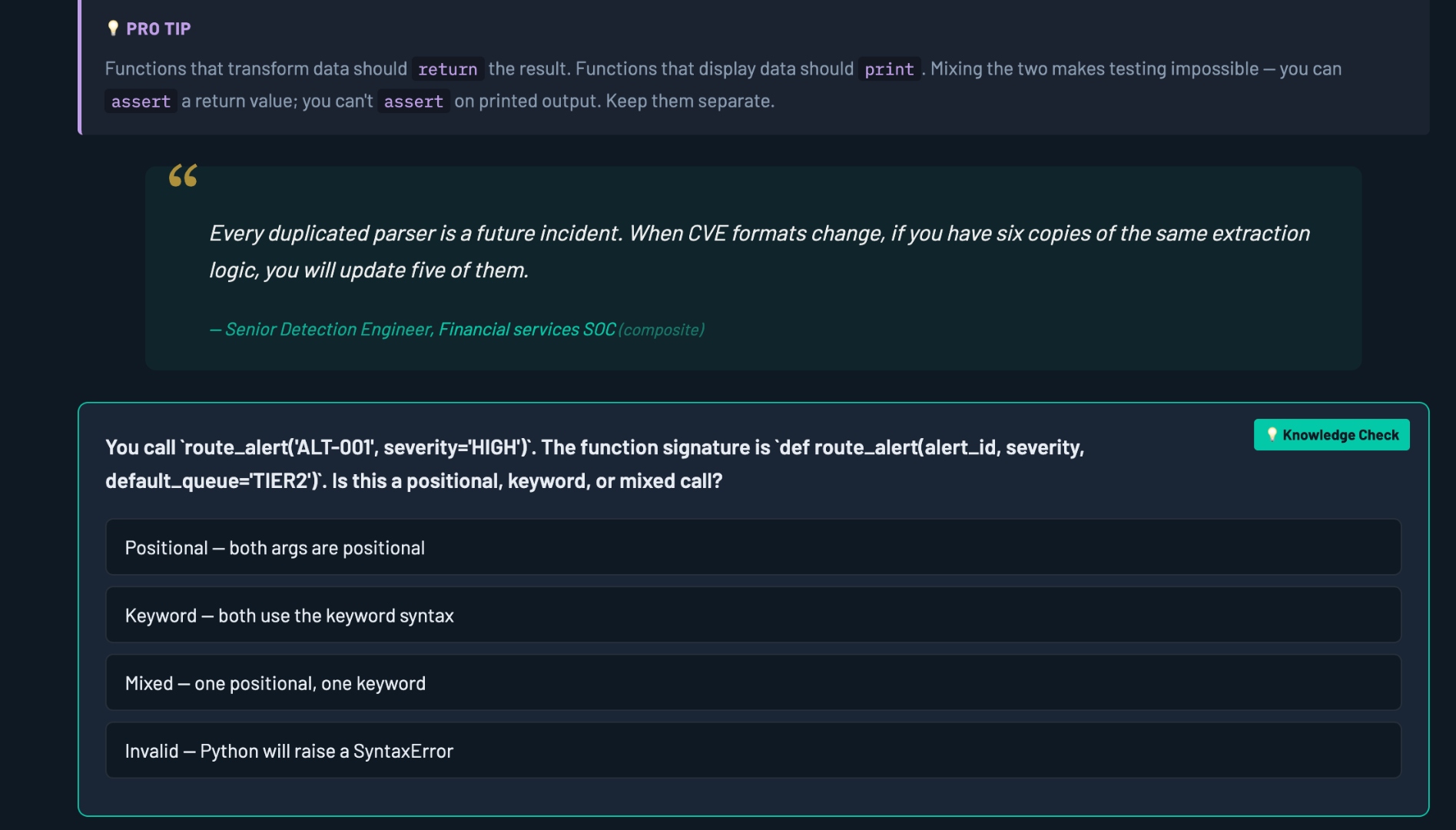
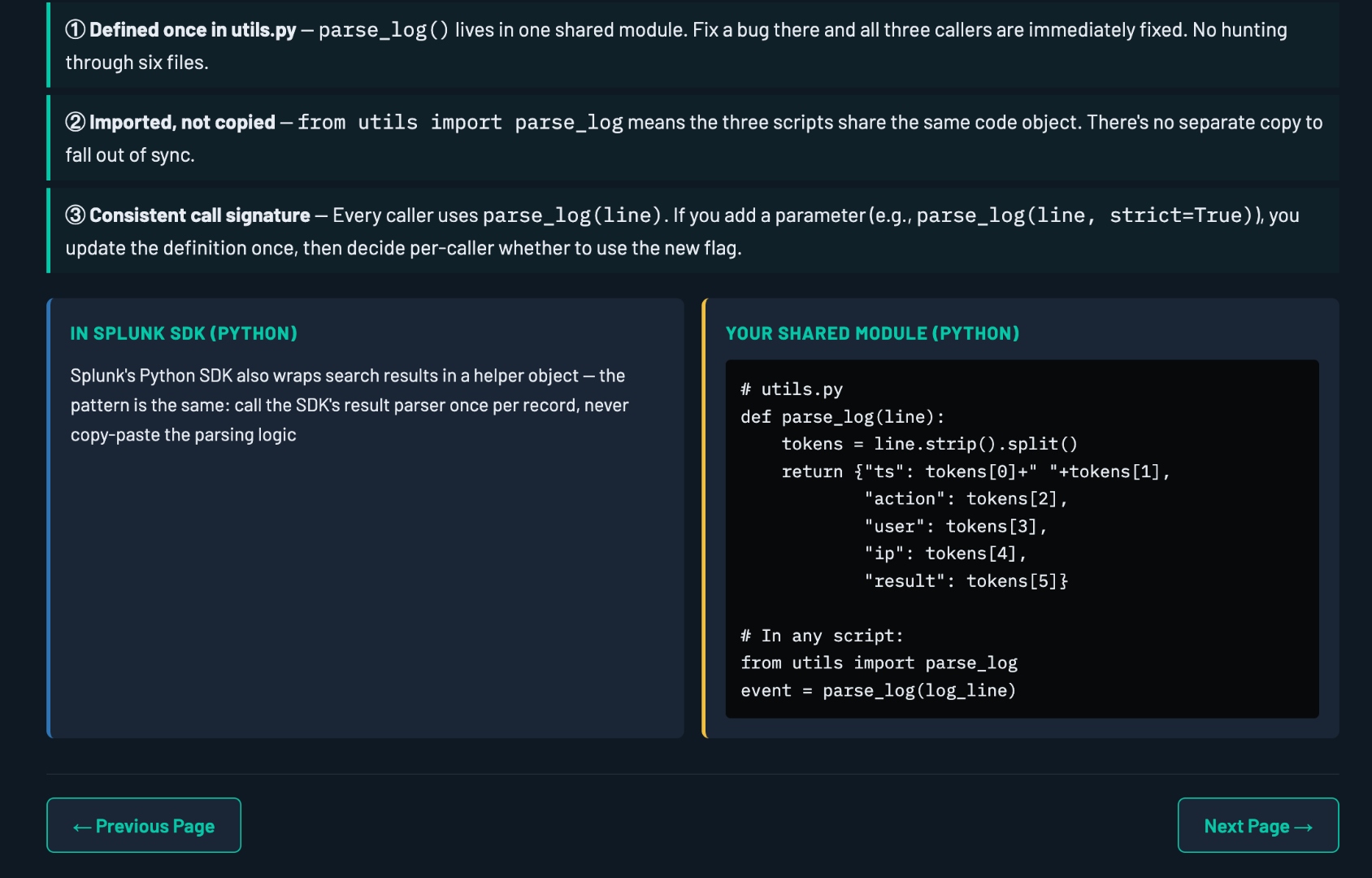
These screenshots are from the live Python Security Sandbox — the actual interface your learners will use from day one.
Python Security Sandbox is the only Python training built for cybersecurity analysts — 7 modules, 35 lessons, 185 exercises, real security datasets, real Pyodide execution engine. NSA/CISA memory-safe language certified. Start building. Go as far as you want.
Launch price with LAUNCH99 · Regular $149 · 30-day money-back guarantee
NSA/CISA named Python a preferred memory-safe language (June 24, 2025). DoD contractors training on Python-first security tooling qualify under the DoD 8140 workforce framework.
What You'll Be Able to Do
Automate log ingestion and analysis — regex parsing, anomaly detection, MITRE T1070 indicator extraction — using Python the way real SOC teams do.
Build packet analyzers, port scanners, and encrypted communication tools using Python's socket and cryptography libraries — DCWF 461/541 work roles.
Consume STIX 2.1 feeds, write YARA rules, develop Sigma detections — and tie them into automation pipelines that respond in real time.
Use pandas and numpy for SIEM-style data analysis — correlate events, surface anomalies, and produce NIST DE.CM dashboards from raw security data.
Design extensible security tools using object-oriented patterns — the PCAP-core skill set that separates junior from mid-level security engineers.
A PDF Lab Report per lesson plus a SHA-256 Completion Certificate — show an employer exactly what you can build, not just claim it.
7 Modules · 35 Lessons · 185 Exercises
Variables, control flow, and data structures — all taught through real security scenarios. Build your first IOC parser from scratch.
Write reusable functions and automated log parsers. Detect T1070 indicators — log deletion, sequence gaps, suppression patterns.
pandas and numpy for security data — correlate events, surface anomalies, build NIST DE.CM dashboards from raw security telemetry.
Sockets, packet analysis, protocol inspection, and cryptographic implementation. Build network reconnaissance and encrypted communication tools.
Classes, inheritance, polymorphism — applied to designing extensible security frameworks, scanners, and detection engines.
Consume and produce STIX 2.1 threat intel, write YARA detection rules, develop Sigma alerts, and build automated response pipelines.
End-to-end security engineering capstone using a game studio scenario — apply every skill across all DCWF work roles in a realistic production environment.
Real Product · No Mockups
These screenshots are from the live Python Security Sandbox — the actual interface your learners will use from day one.
Framework & Cert Alignment
511 · 531 · 541 · 521 · 461 · 621 — six workforce roles mapped across all 7 modules.
Python Institute PCEP, PCAP, and PCES (Python Certified Entry-Level Security Specialist) alignment throughout.
Modules map to CySA+ domains — log analysis, threat detection, incident response, and security automation.
DE.AE, DE.CM, PR.AC and other functions labeled on every lesson — the language compliance teams require.
Technique IDs (T1070, T1046, T1059.006, and more) tagged on exercises so you know exactly which attacker behaviors you're detecting.
Python named a preferred memory-safe language (June 24, 2025). Training aligns to federal contractor and DoD workforce expectations.
Also Available
The original — 7 modules, 35 lessons, 142 exercises of hands-on SQL training built for cybersecurity analysts. Covers NIST CSF, MITRE ATT&CK, and PCI-DSS v4.0.
30-Day Guarantee
Python is now a federally preferred security language. Get full access at $99 — regular price is $149. 30-day money-back guarantee, no questions asked.
Code LAUNCH99 · Regular $149 · Veteran: VETERAN20 · Student: STUDENT20